Webinar - Addressing Common Methodological Flaws in Health Research
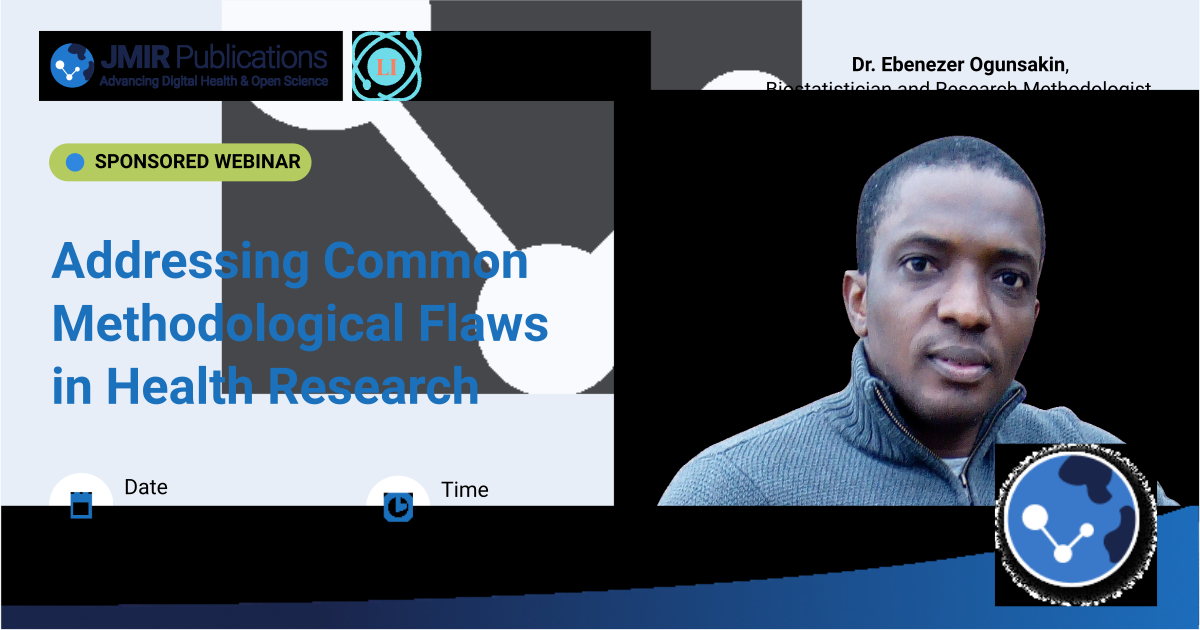
Addressing Common Methodological Flaws in Health Research
Date and Time: Wednesday, October 7, 2026 at 12:00 PM ET
Join Leeds Institute of Science and Technology for an insightful webinar on how to prevent or correct common methodological flaws in health research.
With reproducibility now a major concern in health research, methodological rigor is no longer optional. Most researchers unknowingly repeat the same methodological mistakes. This is one of the reasons for most manuscript rejections.
Understandably, other factors contribute to the acceptance or rejection of a manuscript, but methodological rigor is a requirement that must be fulfilled before acceptance. It is vital in publishing any manuscript in a quality journal.
In this webinar, Dr. Ebenezer Ogunsakin, a biostatistician and research methodologist at Leeds Institute of Science and Technology, will examine common, documented errors observed in health research and equip you with strategies to avoid the errors and their causes. He will share his unique perspectives on what policymakers and reviewers look for, from study design justification to appropriate statistical reporting, giving your manuscripts a very high probability of acceptance. This webinar offers a practical checklist to audit your current or upcoming studies and make your research reproducible and impactful.
You will be equipped to:
- identify common methodological errors and their consequences in health research;
- describe the best techniques to prevent or rectify methodological errors; and
- use available resources, bias control checklist, and statistical test selection guide.
Key Takeaways
- Prioritize Study Design: Focus on the research framework first, as no amount of analysis can compensate for a flawed study design.
- Emphasize Proactive Bias Prevention: Implement measures to prevent bias during the study planning phase, which is far more effective than attempting statistical corrections after data collection.
- Ensure Transparent Reporting: Commit to full and transparent reporting of methods and results to support the replication of findings and advance scientific progress.
Who Should Attend
The session is tailored for early career and experienced researchers, epidemiologists, health policymakers, and health practitioners.
Disclaimer: This webinar is a sponsored educational presentation hosted by JMIR Publications in partnership with the Leeds Institute of Science and Technology. The content and opinions expressed are those of the presenter and do not necessarily reflect the official policies or positions of JMIR Publications.